

































































Herbal Galactagogues: What Does Science Say About Increasing Milk Supply?
By Cindy Collins | Founder of Euphoric Herbals Apothecary, Community Herbalist & Former Lactation Counselor
Can herbs really help increase breast milk supply? It's a question breastfeeding mothers have asked for generations, and one that modern researchers are still investigating.
From fenugreek and moringa to shatavari and goat's rue, herbal galactagogues have a long history of traditional use in supporting lactation. But just because an herb has been used for centuries doesn't necessarily mean it works for everyone—or that its benefits have been scientifically proven.
The encouraging news? Several herbs have demonstrated promising results in clinical studies. However, the overall evidence is still limited, and no single herb has been proven to work consistently for every breastfeeding mother.
As a community herbalist and former lactation counselor, I believe mothers deserve both the wisdom of traditional herbal medicine and an honest understanding of what the research tells us.
Let's explore the science behind some of the most commonly used lactation herbs.
What Are Herbal Galactagogues?
A galactagogue is a substance traditionally used or believed to help initiate, maintain, or increase breast milk production.
Galactagogues may include medications, foods, or herbs.
Herbal galactagogues have been used in traditional healing systems around the world, including Ayurveda, European herbalism, and other cultural traditions.
Some of the most familiar lactation herbs include:
-
Fenugreek (Trigonella foenum-graecum)
-
Moringa (Moringa oleifera)
-
Shatavari (Asparagus racemosus)
-
Goat's rue (Galega officinalis)
-
Fennel (Foeniculum vulgare)
-
Nettle (Urtica dioica)
Although these herbs are often grouped together, their traditional uses, chemical constituents, safety considerations, and available clinical evidence differ considerably.
How Does Breast Milk Production Work?
Before exploring herbs to increase breast milk supply, it's important to understand how lactation works.
Breast milk production involves a complex relationship between hormones, mammary tissue, and the removal of milk from the breasts.
Two important hormones are:
Prolactin: Plays a central role in stimulating milk synthesis.
Oxytocin: Triggers the milk ejection reflex, commonly called let-down, allowing milk to flow from the breast.
Following the early postpartum period, milk production is strongly influenced by how frequently and effectively milk is removed.
This is why frequent breastfeeding or pumping, effective latch, and adequate milk transfer are essential components of maintaining milk supply.
According to the Academy of Breastfeeding Medicine, identifying and addressing underlying causes of low milk production should come before considering galactagogues.
These causes may include ineffective milk removal, maternal medical conditions, medications, or insufficient glandular tissue.
Herbal supplements cannot replace effective milk removal or individualized breastfeeding support.
Research: Academy of Breastfeeding Medicine Clinical Protocol #9 (2018).
Do Herbal Galactagogues Really Work?
This is where the research becomes particularly interesting.
A 2013 systematic review published in the Journal of Human Lactation examined clinical trials involving herbal galactagogues, including fenugreek, shatavari, and other traditional herbal preparations.
Several studies reported improvements in milk production. However, the researchers also identified important limitations, including small sample sizes and differences in study methods.
A larger Cochrane systematic review published in 2020 evaluated oral galactagogues used by breastfeeding mothers of healthy, full-term infants.
Researchers found some evidence suggesting natural galactagogues may improve milk volume, but the certainty of that evidence was low or very low.
The studies differed substantially in the herbs used, dosages, treatment durations, and methods of measuring milk production.
As a result, researchers could not reliably determine which herbal galactagogue was most effective.
The takeaway: Some herbal galactagogues show promise, but we need larger, better-designed clinical trials before drawing firm conclusions about their effectiveness.
Research: Mortel & Mehta (2013); Foong et al. (2020).
What Does Research Say About Specific Lactation Herbs?
Not all lactation herbs have been studied equally. Some have undergone randomized clinical trials, while others are supported primarily by traditional use.
Fenugreek and Breast Milk Supply
Botanical name: Trigonella foenum-graecum
Fenugreek is one of the most recognizable herbs associated with breastfeeding.
Its seeds have a long history of use in traditional herbal medicine, particularly in preparations intended to support lactation.
Some clinical studies have reported increased milk production among mothers using fenugreek-containing preparations.
However, results across studies are inconsistent, and many trials involve combination products rather than fenugreek alone.
Researchers have proposed several possible mechanisms, including effects on pathways involved in lactation, but these mechanisms have not been conclusively established in humans.
What to know about fenugreek:
Fenugreek may cause gastrointestinal discomfort, allergic reactions, and changes in blood glucose. People with legume allergies or those taking blood-glucose-lowering medications should seek medical advice before using it.
While fenugreek remains a popular traditional galactagogue, it is not necessarily the best choice for every breastfeeding mother.
Moringa and Breast Milk Production
Botanical name: Moringa oleifera
Moringa is a nutrient-containing leafy plant traditionally consumed as food and used in postpartum preparations in several parts of the world.
Its leaves contain protein, minerals, vitamins, and various plant compounds, although actual nutrient intake depends on the serving size and preparation.
Moringa has also attracted attention in clinical lactation research.
Several small studies have evaluated moringa leaf preparations during the early postpartum period. Some have reported improvements in milk volume, while others have found no statistically significant difference from placebo.
These mixed results suggest that moringa deserves further investigation, particularly regarding preparation, dosage, and timing.
It's also important to distinguish moringa's nutritional composition from proven effects on milk production. Being nutrient-rich does not automatically mean an herb increases breast milk supply.
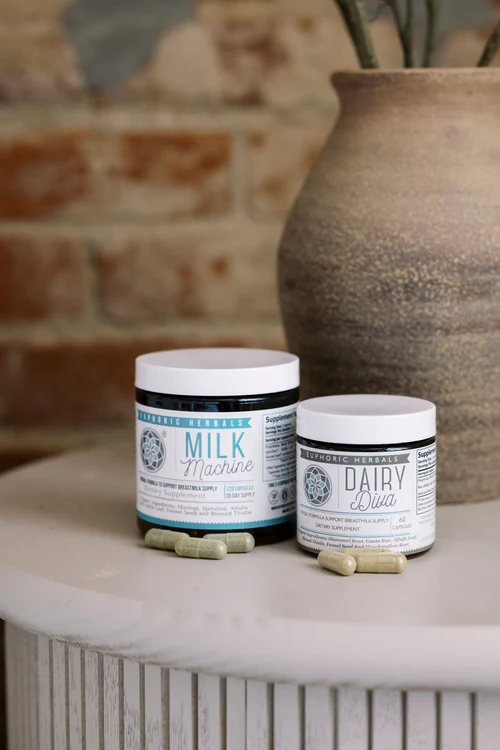
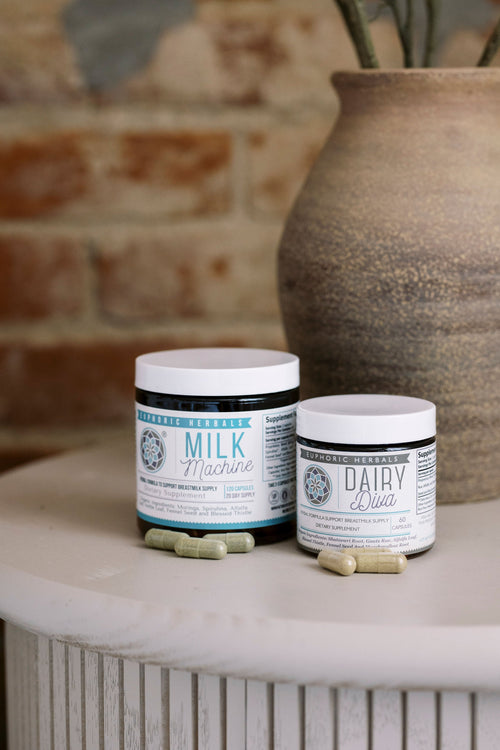
At Euphoric Herbals, moringa is one of the botanicals included in our Milk Machine lactation formula.
Shatavari and Lactation
Botanical name: Asparagus racemosus
Shatavari has a long history in Ayurvedic herbal medicine, where it is traditionally associated with women's reproductive health and postpartum nourishment.
The root contains naturally occurring plant compounds, including steroidal saponins.
Small clinical trials investigating shatavari preparations have reported encouraging findings related to lactation in some participants.
However, the research remains limited by differences in preparations, study quality, and outcome measurements.
Shatavari is sometimes described as a hormone-balancing herb, but clinical evidence is not sufficient to conclude that it corrects specific hormonal disorders or treats conditions such as PCOS.
Its traditional uses are worth understanding, while recognizing the difference between historical practice and demonstrated clinical effectiveness.
Shatavari is one of the featured botanicals in our Dairy Diva lactation blend.
Goat's Rue and Breastfeeding
Botanical name: Galega officinalis
Goat's rue has been used traditionally in European herbal medicine as a galactagogue.
Herbalists have historically associated it with mammary tissue and lactation support.
You may have heard goat's rue recommended for mothers concerned about insufficient glandular tissue (IGT).
However, there is currently insufficient human clinical evidence to establish that goat's rue increases mammary tissue or treats IGT.
Goat's rue contains biologically active compounds, and it may affect blood glucose. Its safety during breastfeeding has not been adequately established through high-quality clinical research.
For mothers experiencing persistent low milk supply or suspected IGT, an evaluation by a qualified lactation professional and healthcare provider is especially important.
Fennel and Milk Supply
Botanical name: Foeniculum vulgare
Fennel is an aromatic herb traditionally used in digestive and breastfeeding preparations.
It contains naturally occurring compounds such as anethole, which has been investigated for biological activity.
Some small studies have explored fennel-containing preparations in breastfeeding mothers, but the available evidence is insufficient to establish a reliable increase in milk production.
Safety also depends on the form and amount used.
Culinary fennel, herbal tea, concentrated extracts, and fennel essential oil are not interchangeable. Concentrated preparations may present additional risks, and fennel essential oil should not be assumed safe for ingestion while breastfeeding.
Nettle for Postpartum Nutrition
Botanical name: Urtica dioica
Nettle leaf has long been valued by herbalists as a nutritive plant.
It contains minerals and other plant constituents, with nutritional amounts varying according to growing conditions, processing, and preparation.
Nettle is commonly included in traditional postpartum teas and herbal formulas.
However, there is very little direct clinical evidence demonstrating that nettle independently increases breast milk production.
Its inclusion in lactation preparations is primarily based on traditional nutritive use rather than proven galactagogue activity.
Nettle is among the botanicals included in our Milk Machine formula.
Why Do Lactation Herbs Work Differently for Everyone?
One of the most important things to understand about breastfeeding is that low milk supply does not have a single cause.
Some mothers experience delayed milk production after childbirth. Others encounter difficulties with latch, milk transfer, feeding frequency, or pumping effectiveness.
Medical conditions, previous breast surgery, hormonal changes, and insufficient glandular tissue may also contribute.
Even when two mothers experience similar symptoms, the underlying circumstances can be very different.
This is one reason researchers have difficulty identifying a universally effective galactagogue.
Individual responses to herbal supplements may vary, but it is important not to assume that a particular herb can correct the underlying cause of low supply.
If you're concerned about your milk production, a qualified lactation consultant can help assess feeding, infant weight gain, milk transfer, and other factors that may be contributing.
Are Herbal Galactagogues Safe While Breastfeeding?
Natural doesn't automatically mean safe, particularly during pregnancy and breastfeeding.
Herbal products contain biologically active compounds that may affect the mother, interact with medications, or potentially expose a nursing infant to plant constituents.
Important considerations include:
-
Medication interactions: Certain herbs may interact with blood-glucose-lowering medications, anticoagulants, or other treatments.
-
Allergies: Herbs such as fenugreek may cause reactions in susceptible individuals.
-
Product quality: Botanical identity, purity, preparation, and dosage can vary.
-
Limited safety research: Many traditional lactation herbs lack robust studies evaluating effects on breastfeeding infants.
-
Individual medical history: Diabetes, hormonal conditions, and other health concerns may influence whether an herb is appropriate.
Before beginning an herbal lactation supplement, discuss its ingredients with a qualified healthcare professional familiar with breastfeeding.
The National Library of Medicine's LactMed database is another useful resource for reviewing available information about medications and selected herbs during lactation.
Can You Combine Different Lactation Herbs?
Combination herbal formulas have a long history of use in traditional herbal medicine.
Rather than focusing on a single botanical, these preparations may include several herbs selected for their different traditional properties.
For example, a formula might combine herbs traditionally used as galactagogues with nutritive botanicals.
However, there is an important distinction between traditional formulation principles and clinical evidence.
Combining several herbs does not automatically make a supplement more effective.
The effectiveness and safety of any combination depend on the specific ingredients, amounts, and individual circumstances.
Research evaluating one herb cannot establish that a multi-herb product containing it will produce the same results.
How to Choose the Right Lactation Support
At Euphoric Herbals Apothecary, we developed several lactation formulas using different combinations of traditionally used botanicals.
Our formulations include:
Milk Machine — A nutrient-focused herbal blend featuring moringa, spirulina, nettle, fennel, and other botanicals.
Dairy Diva — A traditional lactation formula featuring shatavari, goat's rue, marshmallow root, and complementary herbs.
Dairy Fairy — A formula featuring traditional galactagogue herbs, including fenugreek and goat's rue.
Each formula has a different ingredient profile, but none is guaranteed to increase milk production or treat an underlying medical condition.
When choosing a supplement, consider the complete ingredient list, your health history, possible medication interactions, and guidance from your lactation care team.
You can also explore our complete collection of breastfeeding and lactation support products.
Frequently Asked Questions About Herbal Galactagogues
What are the best herbs to increase breast milk supply?
Fenugreek, moringa, and shatavari are among the herbs investigated in clinical lactation research. Some studies report promising results, but evidence remains insufficient to identify one herb as consistently the most effective. The best approach begins with understanding why milk supply may be low.
How long do herbal galactagogues take to work?
There is no scientifically established timeline that applies to all herbal galactagogues. Clinical studies use different treatment durations and methods of measuring results. If milk supply is a concern, don't delay lactation assessment while waiting for a supplement to work.
Does moringa really increase breast milk production?
Some small clinical trials have reported increased milk volume with moringa preparations, while others have found no statistically significant benefit. Moringa is promising, but larger, well-designed studies are needed to establish its effectiveness.
Is fenugreek safe while breastfeeding?
Fenugreek has a history of use during breastfeeding, but safety information is incomplete. It can cause gastrointestinal symptoms, allergic reactions, and changes in blood glucose. Consult a healthcare professional before taking concentrated fenugreek supplements, especially if you use medication or have underlying health conditions.
Can I take multiple lactation herbs together?
Some traditional lactation formulas contain several herbs, but combining products may increase exposure to ingredients and potential interactions. There is limited evidence that taking multiple herbal galactagogues together is more effective. Review the complete formulas with a qualified healthcare professional before combining supplements.
What should I do if lactation supplements aren't working?
Seek an assessment from an International Board Certified Lactation Consultant (IBCLC) or another qualified breastfeeding professional. They can help evaluate milk transfer, feeding frequency, pumping, infant growth, and possible medical causes of low milk supply. If your baby has poor weight gain, fewer wet diapers, or signs of dehydration, seek prompt medical care.
Final Thoughts: Traditional Wisdom Meets Modern Research
Herbal galactagogues have been part of breastfeeding traditions for generations, and modern science is beginning to investigate some of those traditional uses.
The research surrounding herbs such as moringa, fenugreek, and shatavari is encouraging in certain studies, but there are still important questions about effectiveness, safety, preparation, and dosage.
No single herb has been proven to work for every breastfeeding mother.
As a community herbalist and former lactation counselor, I believe families deserve education that respects traditional herbal knowledge while remaining grounded in scientific evidence.
Herbs may have a supportive role for some mothers, but they are not a substitute for effective breastfeeding management or professional lactation care.
And perhaps most importantly, your breastfeeding journey is not defined by the number of ounces you produce.
Whether you breastfeed for one day, one year, or beyond, your experience deserves encouragement, compassion, and support.